Academic
We believe in whole-body learning and use the following academic components in our preschool curriculum:
We use Zoo-phonics to teach the ABCs using visual, sound, and motion cues.
We implement Ready to Advance, a district-adopted, literacy program designed to help little ones gain an understanding of early literacy skills.
We use Number Corner, a district-adopted, skill-building program that revolves around the classroom calendar, providing daily practice as well as continual encounters with broader mathematical concepts.
We also use Heggerty Phonemic Awareness, a learning program that helps children with the beginning building blocks of reading and writing.
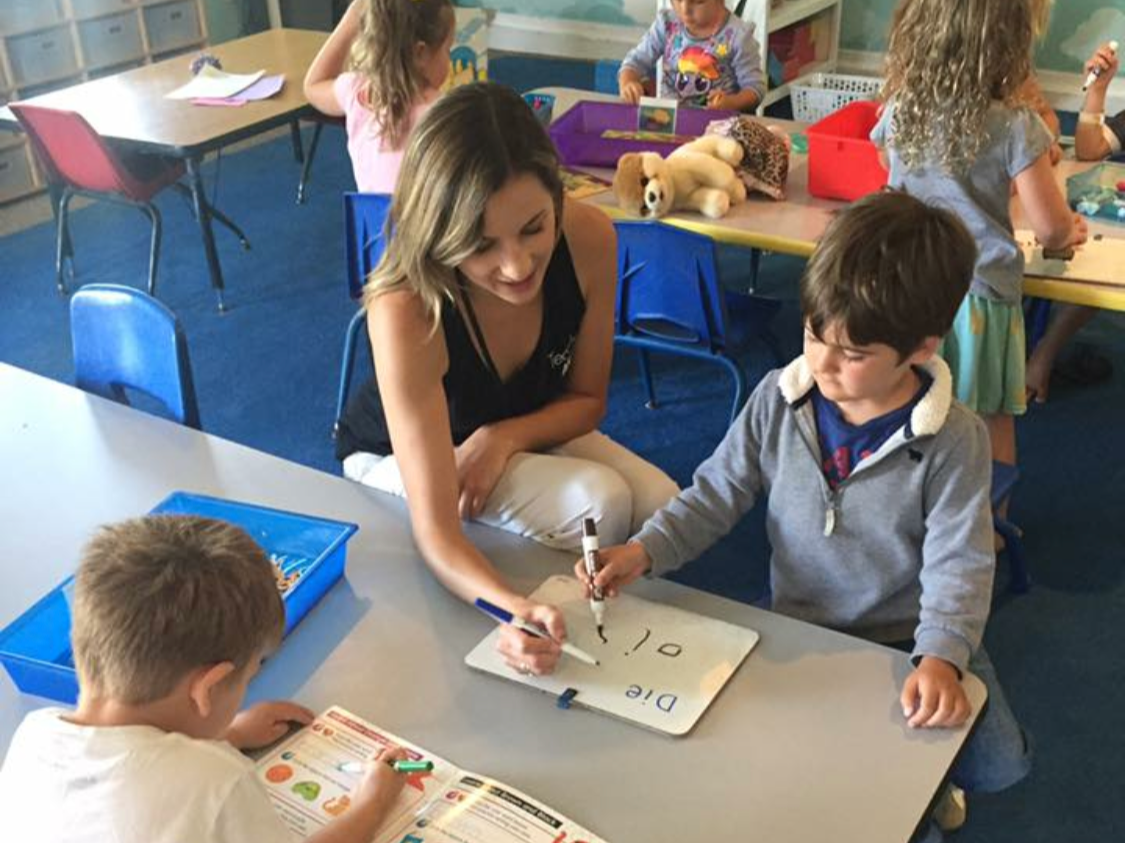
Working on name writing!
social skills
Our trained child care staff help children learn and play alongside others, relate to their peers, and advocate for their own needs.
Our social developmental activities include:
Social-Emotional curriculum
Books and stories
Modeling
Organized games
Playtime
Self-regulation

At Love to Learn, children will learn to play cooperatively while having an awareness of their own bodies.
Our self-regulation activities include:
Discussions (small and large group)
Social-Emotional curriculum
Reading Books
Modeling
Encouragement
Team games
self-care
Children will learn to perform basic self-help and self-care skills such as washing hands & healthy habits, independence, and snack/lunch time routines.
Activities that support self-care are:
Reading Books
Signing Songs
Discussions
Modeling
Practice
motor skills
At Love to Learn, we encourage children to practice both fine and gross motor skills.

Activities that build fine motor skills include:
Playing with clay and play dough
Using crayons, markers, pencils & chalk
Painting with fingers & with brushes
Using small manipulatives (scissors, puzzles, etc.)
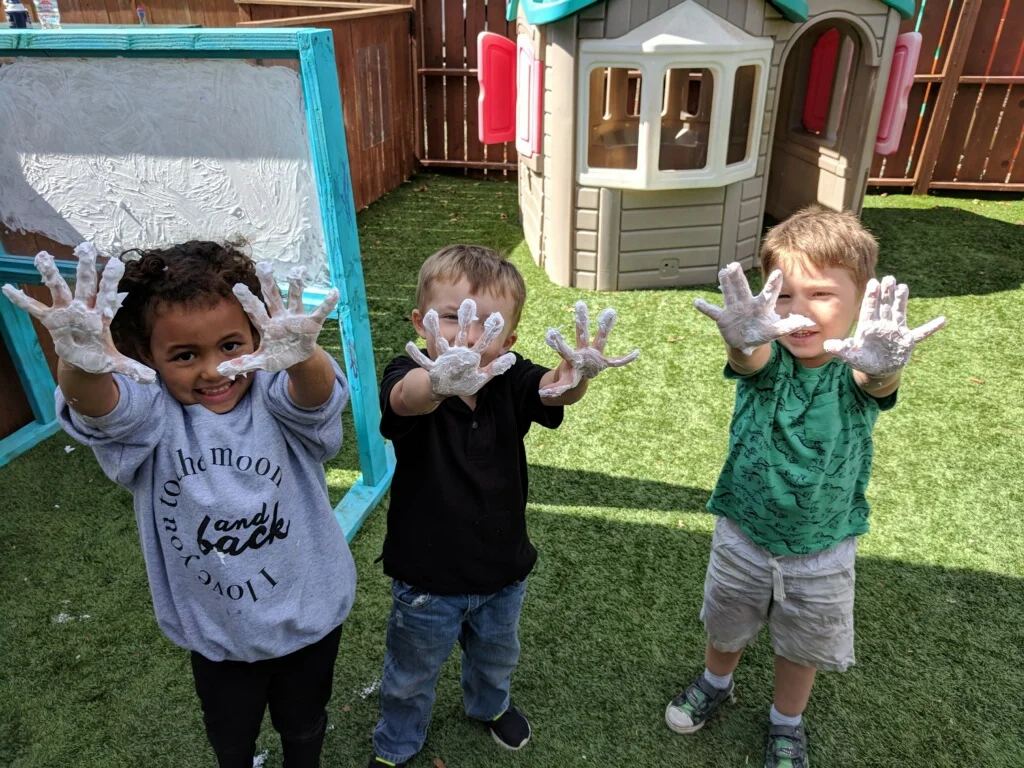
Using tactile materials (shaving cream, sand, etc.)
Activities that build gross motor skills include:
Riding trikes, scooters, wagons, etc.
Hula hoops
Playground play
Movement & dance
Running, skipping, hopping relays and games